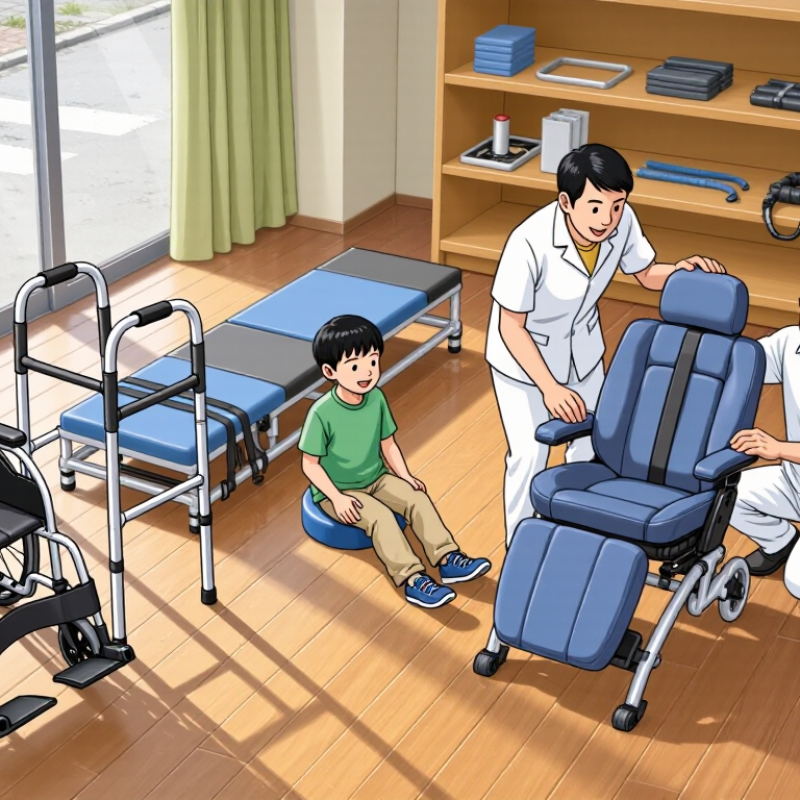
Choosing suitable support equipment across borders requires more than comparing prices. Cerebral Palsy Assistance should begin with the person’s daily routine, movement pattern, communication style, and home environment. A lightweight walker may work well on smooth floors but fail on uneven streets. A seating system may look comfortable yet create pressure points after several hours. These details matter.
Professor Peter Rosenbaum, a leading cerebral palsy researcher, described cerebral palsy as “a group of disorders of the development of movement and posture, causing activity limitation.” His definition reminds global buyers to assess function, not appearance. The right product should support participation at school, work, home, and outdoors. It should also allow adjustment as the user grows or abilities change.
This guide presents ten practical Cerebral Palsy Assistance tips for international buyers. Each tip considers clinical input, product evidence, sizing, materials, training, maintenance, delivery, and after-sales support. Buyers should request clear measurements, user instructions, warranty terms, and replacement-part information. Independent assessment is valuable, especially for complex seating, standing, or mobility equipment. Local therapists can identify risks that online descriptions miss.
Small mistakes become expensive. A wrong seat depth can cause discomfort. An unavailable spare part can stop daily use. Currency conversion is not the whole cost. Import procedures and local service capacity also deserve attention, while requirements vary by country. No checklist replaces professional evaluation. Still, careful questions can prevent avoidable disappointment and support safer, more confident purchasing decisions.
Cerebral palsy affects movement, posture, communication, and daily participation differently for each person. The CDC’s Autism and Developmental Disabilities Monitoring Network reported cerebral palsy in about 1 in 345 eight-year-old children in 2019. This figure supports careful assessment, not one-size-fits-all purchasing. A buyer should record the user’s transfer method, sitting tolerance, muscle control, home layout, and personal goals before comparing equipment.
Ask whether the person wants safer bathing, easier school access, independent feeding, or better outdoor mobility. These goals guide useful features, including adjustable seating, supportive harnesses, pressure-relieving surfaces, and simple controls. A physiotherapist, occupational therapist, and local caregiver can check fit and safe use. WHO estimates that 1.3 billion people experience significant disability worldwide, so regional access, training, repair, and replacement parts also matter. Availability matters too.
Small details can change daily life. Measure doorways with a tape measure. Test foot support while the user wears normal shoes. Check whether caregivers can lift, fold, clean, and transport the product. Avoid choosing from photographs alone.
A perfect fit is rare. My own practical preference is to request a supervised trial, then revise the plan after real home use. Some early assumptions may be wrong, especially when fatigue, pain, or growth changes the user’s needs. Record these changes and review support goals regularly.
Identifying suitable assistive products starts with the person, not the catalogue. The WHO and UNICEF Global Report on Assistive Technology estimates that over 2.5 billion people need assistive products worldwide. Nearly 1 billion people still lack access. Buyers should assess posture, muscle control, fatigue, communication, and home routines before choosing equipment. A wheelchair may need adjustable seat depth, lateral supports, pressure relief, and manageable weight. A communication device should support the user’s motor abilities, language, and eye or hand access.
Accessibility features deserve equal attention. Measure doorways, bathroom turning space, ramp gradients, transfer heights, and floor surfaces. Check whether controls work with limited grip or involuntary movement. Look for washable materials, secure brakes, battery backup, clear instructions, and replacement parts available locally. WHO’s Global Report on Health Equity for Persons with Disabilities notes that inaccessible environments create avoidable barriers to participation. Small design details matter.
Test before committing, when possible. A technically compliant product may still cause pain after twenty minutes. That is an uncomfortable lesson. Caregivers should ask about training, servicing, warranty terms, and future growth. Local therapists can evaluate fit, while buyers should confirm relevant safety and accessibility requirements in the destination country. Price alone misleads. The cheapest option may require costly adaptations later. Product selection should remain flexible, because needs can change with growth, therapy, fatigue, and daily living conditions.
10 Cerebral Palsy Assistance Tips for Global Buyers
Safety, quality standards, and clinical suitability should guide every purchase. Ask whether the product matches the user’s posture, muscle tone, movement, and daily environment. A walking aid that works indoors may fail on uneven outdoor surfaces. Check frame stability, brake response, fasteners, padding, and weight limits. Small details matter. Request test reports, material information, and clear maintenance instructions from the supplier. Independent inspection can provide stronger evidence than attractive product photos.
Tip: Confirm that the equipment follows recognized medical-device or safety standards in the destination market. Requirements differ between countries, so verify documentation with a qualified local distributor or regulatory professional. Look for traceable batch information and a clear process for reporting defects. Do not rely only on a certificate; its scope and date deserve careful review. I have seen buyers treat paperwork as proof of clinical fitness, but these are not the same thing.
Tip: Ask a licensed physiotherapist or occupational therapist to assess fit before ordering. Measure seat width, support height, foot position, and adjustment ranges. Consider transfers, cleaning, transport, and caregiver strength. A product may appear comfortable for ten minutes yet create pressure after an hour. Trial use is valuable, although it is not always available for international orders. That limitation should be acknowledged, not hidden. Safety decisions deserve patient observation and careful follow-up.
Checking safety, quality standards, and clinical suitability
The chart groups ten practical buyer checks into three decision areas: safety, quality assurance, and clinical suitability. The values show the number of checklist items in each area, not clinical outcomes or product rankings.
Global buyers of cerebral palsy assistance products should compare the whole service, not the catalogue price. WHO and UNICEF’s Global Report on Assistive Technology (2022) estimates that 2.5 billion people need assistive products worldwide. That demand makes supplier verification essential. Ask for clinical specifications, user weight limits, adjustment ranges, material details, and test documents. ISO 7176 standards can guide wheelchair safety and performance checks. A polished website proves little. Request recent inspection records and two comparable customer references.
Compare total landed cost in one spreadsheet.
Include unit price, customization, packaging, freight, insurance, import duties, local tax, installation, training, and replacement parts. A cheaper product may become costly after a damaged shipment or unavailable component. For delivery, check production time separately from transit time. The World Bank’s Logistics Performance Index 2023 assesses customs, infrastructure, international shipments, tracking, and timeliness. Use those factors when judging a supplier’s delivery route. Require milestone updates, a damage-report process, and a realistic buffer for port delays.
Warranty terms deserve line-by-line review. Confirm coverage period, excluded parts, response time, return location, labor costs, and who pays freight. Ask whether repairs can be completed locally. Written support is safer than promises in a video call. I would also request a sample service case before payment. That step feels slow. It can expose weak after-sales systems.
Buyers should test fit, posture support, brake access, and caregiver handling with an occupational therapist or qualified clinician. Reports inform decisions, but each child’s function, growth, home layout, and funding rules still change the best choice. A perfect comparison sheet cannot replace hands-on assessment.
Buying cerebral palsy assistance equipment across borders requires more than comparing prices. Plan a supervised product trial with a qualified therapist and the user’s family. Test transfers, posture, comfort, communication, and daily movement in realistic settings. A clinic floor is not the same as a crowded home. Record measurements, adjustment limits, and the user’s feedback before approving an order. Ask for translated manuals, training videos, and clear setup instructions. Keep expectations realistic.
Training should include caregivers, teachers, and support workers, not only clinical staff. Demonstrate safe fitting, positioning, charging, cleaning, and emergency release procedures. Let each person practice while a professional observes. Short sessions work better than one long demonstration. Written checklists help, but they can become outdated. Review them after the first week and correct unclear steps. Small details matter, such as labeling straps or storing tools beside the equipment.
Maintenance planning protects both safety and investment. Confirm spare-part availability, remote troubleshooting, inspection schedules, and repair response times before purchase. Identify a local service contact when possible. Keep photos of correct settings and a log of repairs. Long-term support should include reassessment as the user grows or abilities change. A product that fits today may restrict movement later. Plans can fail. Budget for retraining, replacement parts, and occasional travel support. Honest feedback from users should guide every adjustment.
| No. | Planning Area | Practical Assistance Tip | Key Data or Checkpoint | Recommended Action | Responsible Person |
|---|---|---|---|---|---|
| 1 | Needs Assessment | Define the user’s mobility, posture, communication, self-care, transport, and home-access requirements before selecting equipment. | Record current abilities, support needs, body measurements, daily-use environments, and primary goals. | Use an assessment led by a qualified physiotherapist, occupational therapist, or rehabilitation team. | Clinical team and caregiver |
| 2 | Product Specification | Match the product to posture, pressure management, transfer ability, growth, terrain, climate, and the user’s expected daily activity. | Check seat width and depth, back height, foot-support position, weight capacity, adjustment range, and compatibility with transport. | Request a dimensional specification sheet and confirm that adjustments can be made locally. | Buyer and prescribing professional |
| 3 | Trial Planning | Test the equipment in the environments where it will actually be used, including home, school, community areas, and vehicle-access points. | Trial at different times of day and on the user’s usual surfaces, slopes, doorways, and transfer locations. | Use a written trial checklist covering comfort, stability, maneuverability, transfers, and caregiver effort. | User, caregiver, and clinical team |
| 4 | Outcome Measurement | Measure whether the product improves participation and safety rather than judging it only by appearance or technical features. | Track comfort, posture, skin condition, transfer safety, travel distance, task completion, and caregiver assistance. | Record baseline observations before the trial and compare them with observations during use. | Clinical assessor and caregiver |
| 5 | Safety and Skin Care | Confirm that positioning supports comfort and does not create excessive pressure, shear, instability, or restricted movement. | Inspect skin after use, especially over the pelvis, heels, elbows, shoulders, and other contact areas. | Stop use and seek professional advice if persistent redness, pain, swelling, numbness, or new functional problems occur. | Caregiver and clinical team |
| 6 | Caregiver Training | Provide hands-on training for setup, positioning, transfers, folding or disassembly, charging where applicable, and emergency procedures. | At least two caregivers should demonstrate correct use and explain the main safety precautions. | Use return-demonstration training, illustrated instructions, and locally understandable language. | Supplier trainer and caregiver |
| 7 | Documentation and Localization | Make sure instructions, warnings, service procedures, and warranty terms are usable in the destination country. | Verify language availability, electrical requirements, import documents, user manuals, and accessibility of technical support. | Keep a product file containing serial information, fitting records, training records, and service contacts. | Importer, buyer, and supplier |
| 8 | Routine Maintenance | Establish a maintenance routine based on the product’s instructions and intensity of use. | Before each use, check fasteners, brakes, straps, tires or wheels, cables, cushions, frame damage, and unusual sounds. | Schedule professional inspection according to the manufacturer’s instructions or sooner if heavy use, damage, or performance changes occur. | Caregiver and qualified technician |
| 9 | Growth and Reassessment | Children and adolescents may outgrow or no longer fit equipment as their body size, tone, strength, and functional goals change. | Recheck fit, posture, comfort, skin condition, and function whenever there is growth, a clinical change, or a change in daily activities. | Plan adjustment, replacement, or refurbishment options before the equipment becomes unsuitable. | Clinical team and buyer |
| 10 | Long-Term Support | Evaluate the complete support pathway, including spare parts, repairs, technical training, warranty handling, and end-of-life replacement. | Confirm service contact methods, expected response process, parts availability, repair location, warranty exclusions, and escalation procedures. | Obtain written after-sales terms and identify a local or regional service resource before purchase. | Buyer, importer, and service provider |