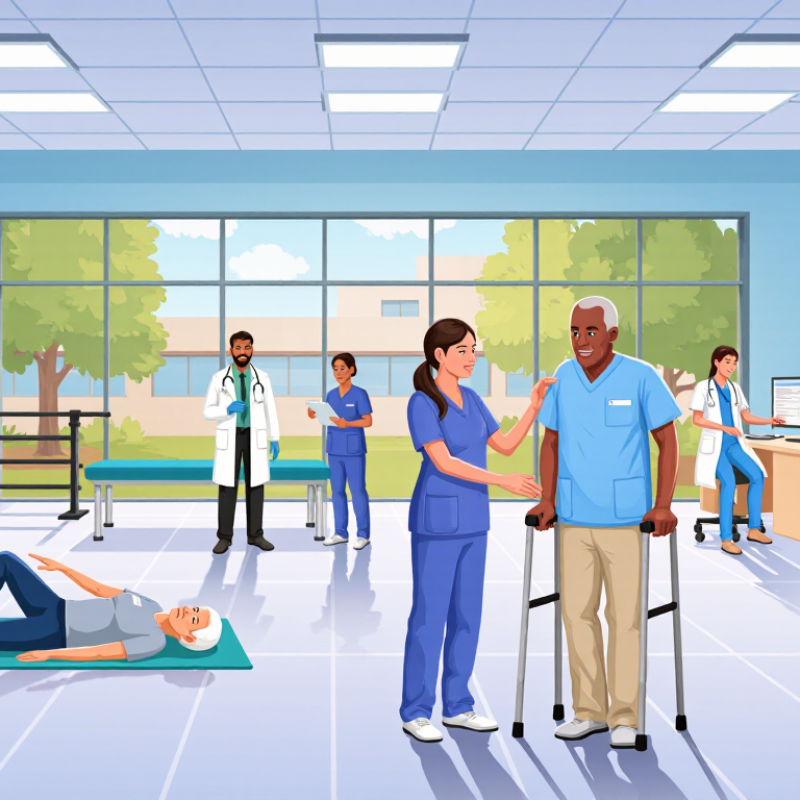
Rehabilitation nursing supports people rebuilding strength, movement, confidence, and independence after illness or injury. It combines clinical judgment with patience, coaching, and careful observation. A patient may need help transferring from bed, managing pain, or using a walker safely. Small details matter.
This guide explores ten respected Rehabilitation Nursing Training courses worldwide. It considers curriculum depth, clinical placement quality, faculty experience, assessment methods, and recognition by relevant professional or educational bodies. It also examines learning formats, tuition considerations, and access to simulation laboratories. Strong programs should connect classroom theory with supervised practice, interdisciplinary teamwork, and evidence-informed care. Official course pages and professional standards remain important verification sources.
No course is perfect. A famous institution may offer limited placement flexibility, while a smaller program may provide closer mentoring. Rankings can also reflect incomplete information. Comparison remains partly subjective. Learners should check current accreditation, entry requirements, clinical hours, graduate outcomes, and renewal dates before applying. The right choice depends on professional goals, location, budget, language, and previous nursing experience. Practical relevance matters. A useful course should prepare nurses for real conversations, such as encouraging a stroke survivor during a difficult morning exercise. It should also address dignity, cultural safety, family education, and safe discharge planning. These ten options offer a starting point, not a final verdict.
Rehabilitation nursing training prepares nurses to restore function, participation, and confidence after illness or injury. Its scope extends beyond bedside care. Learners assess mobility, pain, cognition, nutrition, communication, and daily activities. They also set measurable goals with patients and families. A practical course may include stroke recovery, spinal injury, amputation care, chronic disease management, and community reintegration. The focus remains personal independence, not only clinical stability.
The World Health Organization reported that 2.4 billion people may benefit from rehabilitation worldwide. Its Rehabilitation 2030 initiative also identifies major workforce and service gaps. These figures make specialized nursing education increasingly important. Training should develop safe transfers, pressure injury prevention, medication awareness, continence support, and therapeutic communication. It should also teach nurses to coordinate with physiotherapists, occupational therapists, physicians, and social workers. Realistic simulations matter. A patient learning to use a walker needs supervision, patience, and clear environmental checks.
Strong programs connect evidence with lived experience. Nurses should practice documenting small gains, such as standing for two minutes or dressing independently. However, training is not always perfectly standardized across countries. Some courses may emphasize hospital recovery and underprepare learners for rural or home settings. That weakness deserves honest reflection. Cultural expectations, caregiver capacity, and income can change rehabilitation outcomes. The State of the World’s Nursing report also highlighted global nursing shortages, making flexible, competency-based education essential. Good training must remain clinically rigorous, locally adaptable, and open to correction.
| Rank | Training Course | Primary Scope | Core Competencies | Typical Duration | Recommended Learners | Clinical Setting | Expected Learning Outcomes |
|---|---|---|---|---|---|---|---|
| 1 | Foundations of Rehabilitation Nursing | Introduces rehabilitation nursing as a person-centred, function-focused specialty that supports independence, participation and quality of life. | Functional assessment Care planning Goal setting Patient education | Short course: 1–3 days Certificate program: 4–12 weeks |
Registered nurses, nursing students, practical nurses and multidisciplinary rehabilitation staff. | Inpatient rehabilitation units, acute hospitals, outpatient services and community care. | Develops a basic rehabilitation nursing plan using functional goals, shared decision-making and interdisciplinary communication. |
| 2 | Neurological Rehabilitation Nursing | Addresses nursing care for people with disorders affecting the brain, spinal cord and peripheral nervous system. | Neurological observation Mobility support Spasticity awareness Communication support | 2–8 weeks part-time | Nurses working with stroke, multiple sclerosis, Parkinson’s disease, traumatic brain injury or other neurological conditions. | Neurology wards, rehabilitation hospitals, day hospitals and home-based rehabilitation. | Recognizes neurological impairments, supports safe mobility and incorporates cognitive, communication and psychosocial needs into care. |
| 3 | Stroke Rehabilitation Nursing | Focuses on recovery and long-term adaptation after ischemic or hemorrhagic stroke. | Swallowing safety Hemiplegia care Aphasia support Secondary prevention | 1–5 days intensive or 4–6 weeks online |
Registered nurses and rehabilitation teams caring for adults after stroke. | Stroke units, inpatient rehabilitation, outpatient clinics and community services. | Applies safe positioning, screens for common complications, promotes self-management and supports reintegration into daily activities. |
| 4 | Spinal Cord Injury Rehabilitation Nursing | Provides specialized care for functional recovery and lifelong health management after spinal cord injury. | Pressure injury prevention Bladder and bowel care Transfer training Autonomic dysreflexia | 2–6 weeks part-time | Nurses in trauma, spinal injury, rehabilitation and long-term disability services. | Specialist rehabilitation units, acute trauma services and community-based care. | Plans individualized prevention and self-management strategies while supporting transfers, skin integrity, continence and participation. |
| 5 | Traumatic Brain Injury Rehabilitation Nursing | Supports recovery from cognitive, physical, emotional and behavioural consequences of traumatic brain injury. | Cognitive rehabilitation support Behavioural approaches Safety planning Family education | 1–4 weeks part-time | Rehabilitation nurses, neurological nurses, case managers and community practitioners. | Acute hospitals, inpatient rehabilitation, transitional care and supported living services. | Adapts communication and care routines to cognitive changes, reduces environmental risks and involves families in recovery planning. |
| 6 | Orthopaedic and Musculoskeletal Rehabilitation Nursing | Covers nursing interventions for recovery after fractures, joint replacement, amputation and other musculoskeletal conditions. | Pain management Postoperative mobility Falls prevention Prosthetic preparation | 1–5 days intensive or 2–6 weeks blended |
Orthopaedic nurses, surgical nurses and rehabilitation practitioners. | Orthopaedic wards, inpatient rehabilitation, outpatient clinics and home health services. | Promotes safe activity progression, identifies complications and reinforces exercise, wound care, mobility and discharge plans. |
| 7 | Cardiopulmonary Rehabilitation Nursing | Supports functional recovery for people with cardiac or respiratory disease through monitored activity and risk-factor management. | Vital-sign monitoring Exercise tolerance Breathing techniques Risk reduction | 2–6 weeks part-time | Nurses working in cardiac, respiratory, intensive care step-down and rehabilitation services. | Cardiac rehabilitation, pulmonary rehabilitation, hospitals and community programs. | Monitors response to activity, identifies warning signs and supports graded exercise, medication adherence and lifestyle modification. |
| 8 | Geriatric Rehabilitation Nursing | Promotes recovery, independence and safe ageing for older adults with frailty, multimorbidity or functional decline. | Comprehensive assessment Falls prevention Delirium awareness Frailty management | 1–5 days intensive or 4–8 weeks online |
Geriatric nurses, rehabilitation nurses, long-term care staff and community practitioners. | Geriatric wards, rehabilitation units, residential care and home-based services. | Balances rehabilitation goals with comorbidities, medication risks, cognition, nutrition, continence and the person’s preferred level of independence. |
| 9 | Paediatric Rehabilitation Nursing | Addresses developmental, physical, communication and family needs of children with congenital or acquired disabilities. | Developmental assessment Family-centred care Play-based participation Safeguarding | 2–6 weeks part-time | Paediatric nurses and multidisciplinary professionals working with children and adolescents. | Children’s hospitals, developmental services, schools and community rehabilitation. | Creates age-appropriate goals, includes caregivers in training and supports participation in learning, play, self-care and family life. |
| 10 | Community Rehabilitation, Assistive Technology and Discharge Planning | Prepares nurses to support continuity of care, home participation and community reintegration after illness or injury. | Home assessment Assistive devices Self-management Care transitions | 1–3 days intensive or 3–6 weeks blended |
Community nurses, rehabilitation case managers, discharge coordinators and primary-care teams. | Homes, primary-care clinics, community centres and supported employment services. | Coordinates safe discharge, identifies environmental barriers, supports assistive technology use and connects people with continuing services. |

Rehabilitation nursing courses worldwide focus on restoring function, safety, and confidence after illness or injury. Core lessons usually begin with comprehensive assessment. Nurses examine strength, balance, pain, cognition, skin condition, nutrition, and emotional readiness. They also learn to set practical goals with patients, such as standing safely, dressing independently, or walking to the bathroom.
Hands-on training develops transfer techniques, mobility support, continence care, pressure injury prevention, and medication awareness. Neurological and cardiopulmonary rehabilitation often require careful observation. A small change in speech, breathing, or coordination may signal deterioration. Clear documentation helps the wider team adjust treatment. Communication matters just as much. Nurses must explain exercises in plain language and respect cultural preferences, fatigue, and personal priorities.
In practice, learners may focus heavily on physical progress and overlook fear or embarrassment. That mistake deserves reflection.
Tips: Practise with realistic scenarios, not only written tests. Check wheelchair brakes before every transfer. Use short instructions and allow extra response time. Ask patients to describe their safety plan. Keep reassessing, because recovery rarely follows a straight line. A patient may walk farther today and need more support tomorrow. That is not failure; it is useful clinical information. Courses are strongest when supervised practice, current evidence, ethical reasoning, and honest feedback work together.
Comparing rehabilitation nursing courses requires more than counting modules or advertised rankings. A credible program should show recognized accreditation, qualified clinical educators, and clear learning outcomes. Its curriculum should cover neurological recovery, mobility support, pain management, assistive technology, communication, and psychological care. Strong programs connect theory with supervised practice in hospitals, community clinics, or rehabilitation centers.
Clinical exposure deserves close attention. Ask how many placement hours students complete and whether supervisors provide written feedback. Simulation rooms can reveal practical skills, such as safe transfers, wheelchair positioning, and pressure injury prevention. Assessment methods also matter. Reliable courses use observed practice, case analysis, reflective writing, and structured examinations rather than attendance alone. Student safety, ethical conduct, disability rights, and culturally responsive care should appear throughout the training.
Cost and online flexibility can influence access, but they should not replace educational quality. Check admission requirements, language support, technology needs, and graduate progression data. A polished website may still provide little evidence. That is a warning sign. No comparison is perfectly objective. A program with excellent facilities may offer weak community placement, while a modest provider may deliver attentive mentorship. I would examine recent student feedback, ask specific questions, and compare evidence across several sources before making a decision. Metrics can guide judgment, but they cannot fully measure compassion at the bedside.
Top 10 Rehabilitation Nursing Training Courses Worldwide
Rehabilitation nursing courses worldwide are becoming more important as disability and chronic illness increase. The World Health Organization estimates that 2.41 billion people may benefit from rehabilitation services. Its World Rehabilitation Alliance reports that needs are rising across every region. Strong programs combine clinical theory, supervised practice, and measurable patient outcomes.
A practical top-ten course framework includes rehabilitation foundations, neurological rehabilitation, stroke recovery, spinal cord care, orthopedic rehabilitation, cardiopulmonary rehabilitation, geriatric mobility, pediatric rehabilitation, pain management, and community-based rehabilitation. Learners should practice safe transfers, wheelchair positioning, continence support, and medication observation. A training room should resemble real life, including a narrow hallway, a transfer board, and a simulated home staircase. These details expose unsafe habits early.
Quality also depends on staffing and assessment. The International Council of Nurses reported 27.9 million nurses globally in 2020, alongside a shortage of 5.9 million nurses. Rehabilitation programs should therefore teach delegation, communication, and culturally responsive care. Look for clinical mentors, competency checklists, and placement hours. Accreditation remains country-specific. No ranking is perfect. Some courses advertise advanced content but provide limited bedside exposure. That weakness deserves closer review before enrollment.
Typical study duration by rehabilitation nursing training pathway
Postgraduate diplomas and master’s degrees generally require the longest commitment, while focused certificates and continuing professional development courses provide shorter routes into specialist rehabilitation nursing practice. Actual duration, clinical placement requirements, and eligibility criteria vary by country and education provider.
Rehabilitation nursing training can open several career pathways beyond bedside care. The World Health Organization reports that 2.4 billion people worldwide live with health conditions that may benefit from rehabilitation. Demand is broad. Trained nurses may work in neurological units, spinal injury centers, cardiac rehabilitation, orthopedics, or community services. A morning may involve gait practice, medication review, and teaching a family member how to support safe transfers.
The pathway can also lead to rehabilitation case management, clinical education, research, or advanced nursing practice. These roles require more than technical knowledge. Nurses must measure functional progress, communicate with therapists, and notice small changes in fatigue, balance, or mood. The U.S. Bureau of Labor Statistics projects 6% registered nurse employment growth from 2023 to 2033, with about 194,500 openings annually. This suggests useful mobility for nurses with focused rehabilitation skills, although national requirements differ.
Career development is rarely perfectly linear. A nurse may begin in acute care, gain rehabilitation experience, then move into community-based disability support. Further study can strengthen assessment and leadership skills. Still, certificates alone do not guarantee competence. Supervised practice matters. I learned that progress can look uneven. A patient walking five extra steps may represent a major clinical gain, while a missed social barrier can weaken an otherwise careful plan. The WHO Global Patient Safety Action Plan also emphasizes person-centred, coordinated care, which should shape every rehabilitation role.