• 103qo

    Wechat

  • 117kq

    MicroBlog

Empowering Lives, Healing Minds, Caring Always

Leave Your Message

How to Choose the Right Rehabilitation Training Equipment

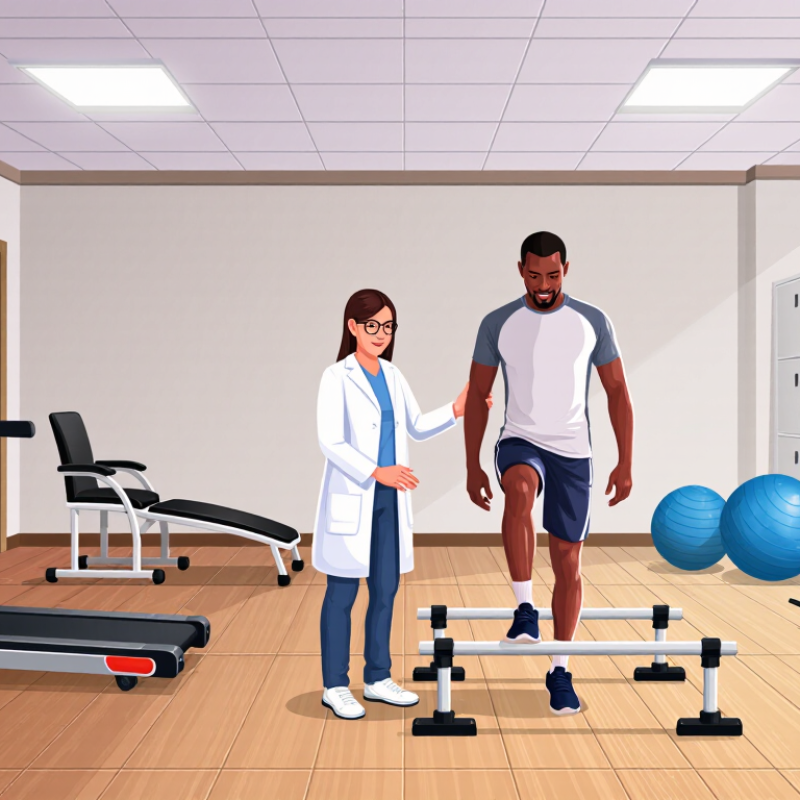
Choosing the right rehabilitation equipment begins with the patient, not the product catalogue. Mobility limits, pain, balance, cognition, strength, and recovery goals should guide every decision. A treadmill may support gait training, yet parallel bars might offer safer first steps for someone with severe instability. Small details matter, including adjustable height, non-slip surfaces, emergency stops, and easy cleaning.

The World Health Organization estimates that 2.4 billion people worldwide could benefit from rehabilitation services. Its Rehabilitation 2030 initiative also identifies rehabilitation as an essential component of universal health coverage. Dr. Alarcos Cieza, who leads rehabilitation work at the WHO, has stated, “Rehabilitation is an essential health service for everyone.” This principle supports a practical approach: equipment must improve access, safety, and measurable function.

Start with evidence.

The Lancet’s 2020 Global Burden of Disease analysis reported substantial rehabilitation needs across musculoskeletal, neurological, and sensory conditions. These findings show why one standard device rarely suits every user. A therapist should assess movement quality, fatigue, transfer ability, and expected progression before purchase. Clinical experience helps, but it cannot replace documented outcomes. Track walking distance, repetition quality, pain response, or task completion over time.

The best Rehabilitation Training Guidance connects professional assessment with real-world use. Consider storage space, caregiver skills, maintenance, warranty coverage, and training requirements. Expensive technology can still fail if staff avoid it or patients find it intimidating. I have seen attractive equipment become unused furniture. That possibility deserves honest attention. Select tools that encourage consistent practice, protect dignity, and adapt as abilities change. Reliability is not a slogan; it is demonstrated through safe sessions and repeatable results.

How to Choose the Right Rehabilitation Training Equipment

Define Rehabilitation Goals and Functional Training Needs

How to Choose the Right Rehabilitation Training Equipment

Define Rehabilitation Goals and Functional Training Needs

Choosing rehabilitation equipment should begin with a clear functional goal, not a catalogue. Start with the person. Can they stand from a chair, reach a shelf, walk safely, or regain hand control? Write the desired action in observable terms. “Improve strength” is vague. “Stand for two minutes without hand support” is more useful. Goals should reflect current ability, daily routines, and realistic progress.

An experienced rehabilitation professional can assess movement quality, pain, fatigue, balance, coordination, and safety risks. The training space also matters. A narrow room, slippery floor, or limited supervision may change the equipment choice. Measure the user’s height, weight, reach, and transfer ability before purchasing anything. Small details can affect confidence and performance. Keep it measurable.

Equipment should support the exact movement being trained. Resistance tools may help controlled strengthening, while balance platforms or step systems can develop weight shifting and coordination. However, harder is not always better. Excessive resistance may encourage poor technique or unnecessary strain. I have sometimes seen equipment selected because it looks advanced, rather than because it solves a real task. That is worth admitting. Review progress through repetitions, walking distance, assistance level, or recovery time, and adjust the plan when the person’s needs change.

Assess the User’s Physical Condition and Recovery Stage

Choosing rehabilitation training equipment begins with the user, not the product. Assess pain, joint stability, muscle strength, balance, sensation, cognition, and cardiovascular tolerance. The recovery stage matters just as much. Early-stage users may need supported movement, low resistance, and stable seating. Later-stage users may benefit from adjustable resistance, coordination drills, or controlled weight-bearing exercises.

The need is substantial. The World Health Organization’s Rehabilitation 2030 report estimates that 2.4 billion people could benefit from rehabilitation worldwide. The Global Burden of Disease Study, published in The Lancet, also identified musculoskeletal conditions as a leading source of disability. These figures support careful equipment selection, but they do not justify one standard solution. A person recovering from stroke may require safety rails and guided stepping. Someone with knee pain may need a low-impact cycle with precise resistance control.

Check functional goals every few sessions. Can the user stand longer, reach farther, or transfer with less assistance? Stop when dizziness, sharp pain, unusual breathlessness, or declining coordination appears. A tidy checklist can still mislead. Real recovery is uneven. Equipment should therefore allow small adjustments, clear feedback, and supervision from a qualified rehabilitation professional. Avoid increasing resistance simply because the user feels impatient. Progress should be measurable, comfortable, and appropriate to medical guidance.

Match Equipment Features to Therapy Requirements

Choosing rehabilitation training equipment starts with the therapy goal, not the product category. The World Health Organization reported in 2023 that 2.4 billion people may benefit from rehabilitation worldwide. That scale hides very different needs. A stroke survivor may need adjustable body-weight support and slow gait practice. A knee patient may need controlled range of motion and measurable resistance. Match each feature to the impairment.

For gait therapy, prioritize low starting speed, stable handrails, emergency stopping, and clear step feedback. For weakness, choose graded resistance, small load increments, and unilateral settings. For balance work, a wide platform and predictable perturbations matter more than a large screen. During assessment, observe heel contact, trunk control, and fatigue across repeated trials. Data should support those observations, not replace them. The WHO Rehabilitation Competency Framework emphasizes person-centered, measurable care (WHO, 2021). Software should record pain, assistance level, repetitions, and progression with minimal staff effort.

Safety details deserve equal attention. Check transfer height, accessible controls, cleaning surfaces, and fail-safe limits. The WHO Global Status Report on Physical Activity 2022 found that 31% of adults worldwide are insufficiently active. This reinforces the need for practical, usable training pathways. More technology does not guarantee better adherence. A device may offer excellent analytics but frustrate an older user with poor contrast or complex menus. That is a real design failure. Reassess the match after two weeks. Swelling, confidence, and caregiver support can change the prescription. A checklist can still miss these human details.

How to Choose the Right Rehabilitation Training Equipment - Match Equipment Features to Therapy Requirements
Therapy Requirement Suitable Equipment Type Important Equipment Features Typical Clinical Applications Recommended Adjustments Safety Considerations Selection Priority
Early-stage mobility and supported standing Parallel bars or a height-adjustable standing frame
  • Stable, wide base
  • Height-adjustable handrails
  • Non-slip foot platform
  • Clear transfer access
Weight-bearing practice, post-operative mobility, balance retraining, and gradual tolerance to upright posture. Set handrails near the user’s wrist level when standing comfortably; increase standing duration gradually. Use a gait belt when indicated, lock wheels before transfer, and monitor dizziness or orthostatic symptoms. High
Gait retraining and walking endurance Rehabilitation treadmill with body-weight support
  • Low starting speed
  • Emergency stop system
  • Adjustable harness support
  • Handrails and visual speed display
Step-cycle practice, reduced-weight gait training, walking endurance, and controlled speed progression. Adjust belt speed, incline, and unloading level according to gait quality and therapist-assessed tolerance. Check harness fit, maintain an unobstructed emergency stop, and supervise users with limited balance. High
Lower-limb strength and functional loading Adjustable resistance machine or leg-press unit
  • Small resistance increments
  • Adjustable seat and back support
  • Defined movement range
  • Easy-access controls
Quadriceps, hamstring, hip, and calf strengthening; sit-to-stand preparation; and controlled loading. Begin with a comfortable range of motion and low resistance; progress one variable at a time. Prevent joint locking, maintain correct alignment, and stop if sharp pain or abnormal swelling occurs. High
Upper-limb range of motion and shoulder control Shoulder wheel, pulley system, or arm ergometer
  • Adjustable height or radius
  • Low-friction movement
  • Variable resistance
  • Stable seating support
Shoulder mobility, coordinated arm movement, gentle endurance training, and task-specific reaching. Position the axis close to the shoulder joint and limit the range if pain, instability, or postoperative restrictions exist. Follow surgical precautions and avoid forcing end-range movement or compensatory trunk motion. High
Fine motor control and hand function Hand therapy station, pegboard, therapy putty, or adjustable grip trainer
  • Multiple resistance levels
  • Interchangeable task modules
  • Easy-to-clean surfaces
  • Clear size and texture options
Grip strength, pinch control, dexterity, coordination, and activities of daily living preparation. Select resistance that permits controlled repetitions without excessive fatigue or compensatory wrist movement. Inspect skin condition, avoid prolonged compression, and consider sensory loss when selecting textures. Medium
Balance, proprioception, and postural control Balance board, foam pad, step platform, or multi-directional balance trainer
  • Progressive instability levels
  • Non-slip surface
  • Support rails or nearby handhold
  • Visible height and load limits
Static and dynamic balance, ankle strategy training, postural reactions, and fall-risk reduction exercises. Progress from stable to unstable surfaces and from bilateral to unilateral stance only when control is adequate. Provide close guarding, remove nearby hazards, and use a safety frame for users with poor protective reactions. High
Cardiovascular conditioning Recumbent cycle, upright cycle, or upper-body ergometer
  • Adjustable workload
  • Back and limb support options
  • Elapsed-time and output display
  • Accessible emergency stop
Low-impact aerobic conditioning, general endurance, warm-up, and activity tolerance training. Adjust seat position, cadence, resistance, and session duration to the user’s functional capacity. Monitor symptoms, perceived exertion, heart rate when appropriate, and signs of exercise intolerance. Medium
Neurological motor control and coordination Repetitive task trainer, stepping system, or interactive movement platform
  • Adjustable task difficulty
  • Repetition counting
  • Visual or auditory feedback
  • Support for asymmetrical loading
Motor relearning, bilateral coordination, rhythmic stepping, reaction practice, and task-specific training. Modify target size, movement speed, assistance, and repetition volume based on accuracy and fatigue. Use simple instructions, reduce distractions when needed, and allow adequate rest between sets. High
Pain-sensitive or low-tolerance exercise Low-load pulley, gentle range-of-motion device, or supported exercise system
  • Very low starting resistance
  • Fine adjustment control
  • Comfortable padding
  • Slow, smooth movement
Early rehabilitation, joint mobility, graded activity, and movement confidence building. Use short sessions, controlled speed, and a pain-monitoring approach agreed upon with the therapist. Differentiate therapeutic discomfort from sharp or worsening pain; follow condition-specific precautions. High
Home-based rehabilitation and independent practice Compact pedal exerciser, resistance bands, step platform, or folding exercise device
  • Simple setup
  • Compact storage
  • Clear instructions
  • Stable, easy-clean construction
Daily mobility exercises, light strengthening, circulation exercises, and maintenance programs. Choose resistance and height that allow the user to exercise safely without continuous assistance. Provide written guidance, check floor stability, and confirm that the user understands when to stop. Medium
Accessibility and transfer support Height-adjustable treatment table, transfer board, or therapy plinth
  • Low entry height
  • Lockable casters
  • Firm, supportive padding
  • Adjustable back and leg sections
Safe transfers, positioning, assisted exercise, manual therapy, and treatment for users with limited mobility. Set the surface height for the user and therapist; position supports to maintain neutral alignment. Lock all wheels, verify weight capacity, and use approved transfer techniques with sufficient staff support. High
Equipment selection for shared clinical spaces Modular rehabilitation station or multi-purpose training unit
  • Multiple exercise functions
  • Adjustable components
  • Durable, disinfectant-compatible surfaces
  • Efficient footprint
Clinics treating varied orthopedic, neurological, geriatric, and general conditioning needs. Prioritize tools that accommodate different heights, abilities, resistance levels, and supervision requirements. Confirm cleaning procedures, inspection schedules, user instructions, and clear access around the unit. High

Evaluate Safety, Adjustability, Space, and Ease of Use

Choosing rehabilitation training equipment starts with safety, not appearance. In practice, inspect weight limits, stable frames, rounded edges, and nonslip feet. Moving parts should stop smoothly when resistance changes. For powered equipment, check emergency controls and visible operating instructions. A qualified therapist should review the user’s strength, balance, pain level, and recovery stage before purchase.

Adjustability matters because bodies rarely fit standard settings. Look for adjustable seat heights, handle positions, resistance levels, and support straps. A good setting should allow controlled movement without forcing a joint. Test the equipment with normal clothing and footwear. If a caregiver assists the user, both people need enough room to move safely. Small details matter, such as readable adjustment marks and levers that do not require strong grip.

Measure the room before ordering. Leave clear space around the equipment, including access for a walker or wheelchair. Check doorway widths, floor strength, storage needs, and cleaning requirements. Ease of use is often underestimated. Can the user adjust it without twisting painfully? Can a helper explain its operation in one minute? I have learned that complicated equipment may be used less often, even when it offers more functions. That is not always fair to advanced designs, but consistency usually supports better training. Ask for professional guidance when instructions seem unclear, and reassess the setup as mobility improves.

Compare Quality, Maintenance Needs, and Overall Value

Choosing rehabilitation training equipment requires more than checking its price tag. Quality affects patient confidence, staff safety, and training consistency. Look for stable frames, smooth adjustments, clear load ratings, and durable contact surfaces. Welds should appear even, while moving joints should operate without grinding or sudden resistance. Ask for inspection records, user instructions, and evidence of safety testing. These details indicate whether the equipment suits repeated clinical use.

Maintenance needs can quietly reshape overall value. Equipment with exposed cables, loose fasteners, or difficult-to-clean padding may demand frequent attention. That cost includes staff time, replacement parts, and interrupted sessions. Choose designs that allow quick cleaning and simple adjustments. Confirm whether spare parts remain available and whether technical support is documented. A longer warranty helps, but it cannot replace reliable construction. Cheaper equipment may win the purchase decision and lose over three years. This is easy to overlook.

Tips: Compare total ownership costs, not only purchase prices. Test adjustments with staff before ordering. Check whether different users can access controls comfortably. Record cleaning times during a trial period. A small inconvenience can become a daily burden. I would also leave room for doubt: impressive specifications do not always reflect better patient outcomes. Practical testing often reveals more.